
Everyone’s a storyteller these days – or so it seems, scrolling through perfectly crafted newsletters and AI-penned posts full of triple adjectives. (Have you noticed that too?) Regenerative and resilient get passed around so often they lose their shape, drained of all meaning. All of which leads me to question the integrity of said project/people/brand. Which is why the real thing, when you find it, stops you in your tracks and reminds you what storytelling really is. Not storyselling.
Two things are missing from AI-generated content: voice and soul. Voice is elusive –a style you recognise the moment you read it. And perhaps it changes depending upon what you write. Many discarded phrases from my novel slotted nicely into my nonfiction book The Nature of Fashion, crossing that hard-to-navigate fiction/nonfiction divide. So perhaps I have found my voice? I’m still not sure. Soul is something else entirely. Although in the context of storytelling, it could perhaps be replaced with heart. Either way, it’s unique to the teller, not borrowed from someone (or something) else.
I started to think about voice and soul not while writing, but in the most unexpected of places: a changing room made from buriti palm. I had written about buriti palm in The Nature of Fashion, describing how it flourishes in aguajales, peat-rich wetlands that stretch across the Amazon basin, acting as some of the planet’s most powerful carbon sinks. The palms grow tall and slow, and these ecosystems store three to five times more carbon per hectare than most other tropical forests. But they are increasingly under threat from development, agriculture and mining. Even the fruit, an important source of nutrition, has become a point of vulnerability – trees are sometimes felled just to make harvesting easier.
So when I stepped into a changing room made from this same palm, I paused, enveloped in the story. Not in the rainforest where buriti palms grow, but on King’s Road, in one of Farm Rio’s London stores. Before I even looked at the clothes, the shop assistant walked me through the layers of meaning behind the space: a marquetry panel charting the journey from Brazil’s coast to the rainforest, hand-painted wallpaper alive with flora, and those palm-fringed changing rooms. Each element was a tribute to place, to craft; interwoven they formed a pictorial story. A story that felt different. Rooted, not borrowed.
Farm Rio began as a collaboration between two childhood friends on a stall at an independent creators’ market in Rio de Janeiro in 1997. And while today it is owned by Brazil’s largest fashion retail group, the founders continue to play an important role in the creative direction. It still looks, and feels, like an independent. It has soul. I left clutching a bag holding a pair of botanical print shorts, the fibres from certified and controlled sources, the buckle raffia.
Later that same day at the RHS Chelsea Flower Show, I was on the Pachacuti stand, the brand I founded back in 1992. The day was warm, and Panama hats were flying off the shelves. The brand is now run by my husband, but standing there amongst all the shoppers, I looked at the images on the walls of the stand – the weavers, the Andes, the cloudforest – and was reminded of why I had started it in the first place. Pachacuti was telling its own tale, not through generic slogans, but through the material itself and the knowledge held in the hands that weave it.
Like the buriti, the toquilla palm (Carludovica pamata) is part of an ecosystem – this one rooted in the cloud forests of Ecuador. While buriti acts as a carbon sink, toquilla palms sustain immense biodiversity – all the more so since ours comes from land that is held in common by the community. In his latest book Is A River Alive? Robert McFarlane describes how cloud forests cover only half a per cent of the world’s surface but contain around 15% of its biodiversity, with those of the northern Andes containing the highest levels. These are the same cloud forests where our Panama hat fibres are harvested, from trees that can be cropped monthly for up to 100 years, with no watering or irrigation required. That’s a sustainable fibre! While the stand was busy, there was still an opportunity for storytelling.
It struck me that day how both spaces – one a vibrant Brazilian brand in a flagship store, the other a stand rooted in Andean craft – were engaging in a practice that transcended commerce. They weren’t just selling things; they were sharing meaning. Material literacy. Cultural continuity. These were not just places of commerce butopenings for narrative. In an era when much of retail is flattened into efficiency and scale, both felt expansive.
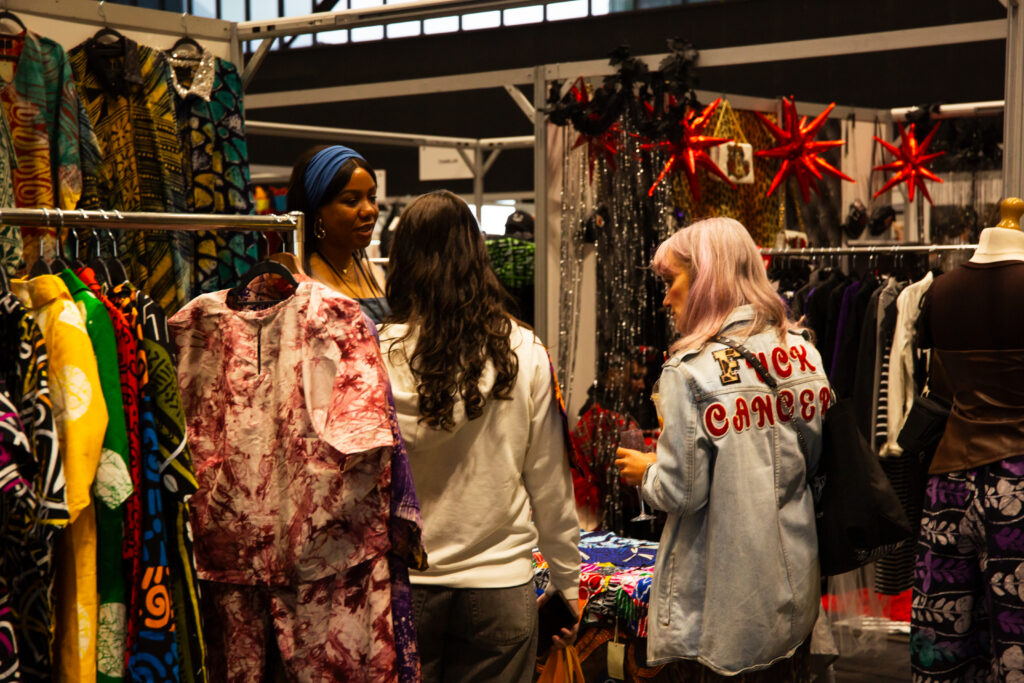
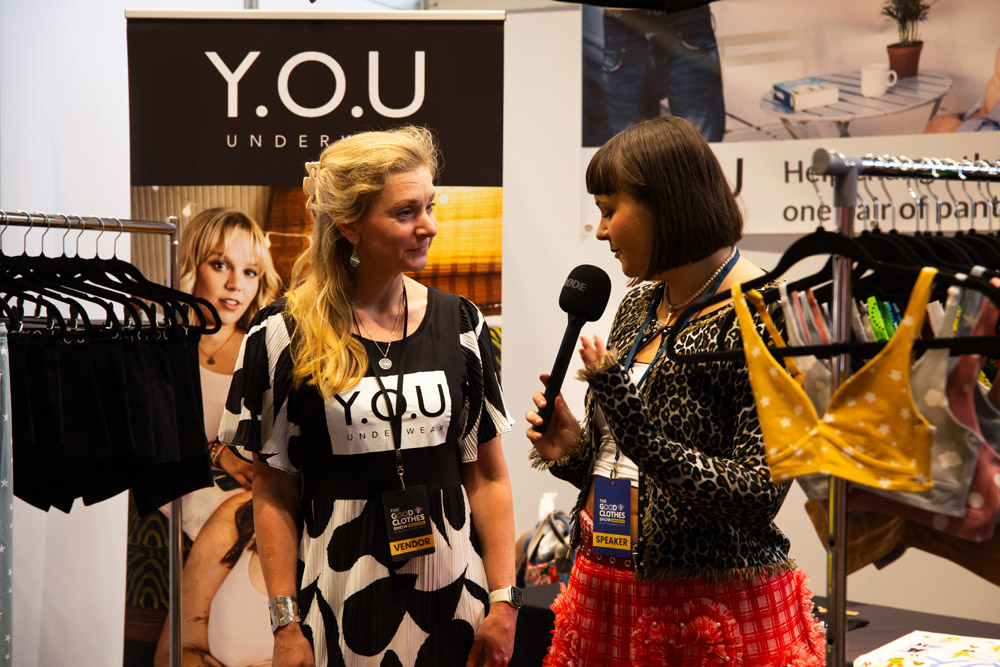
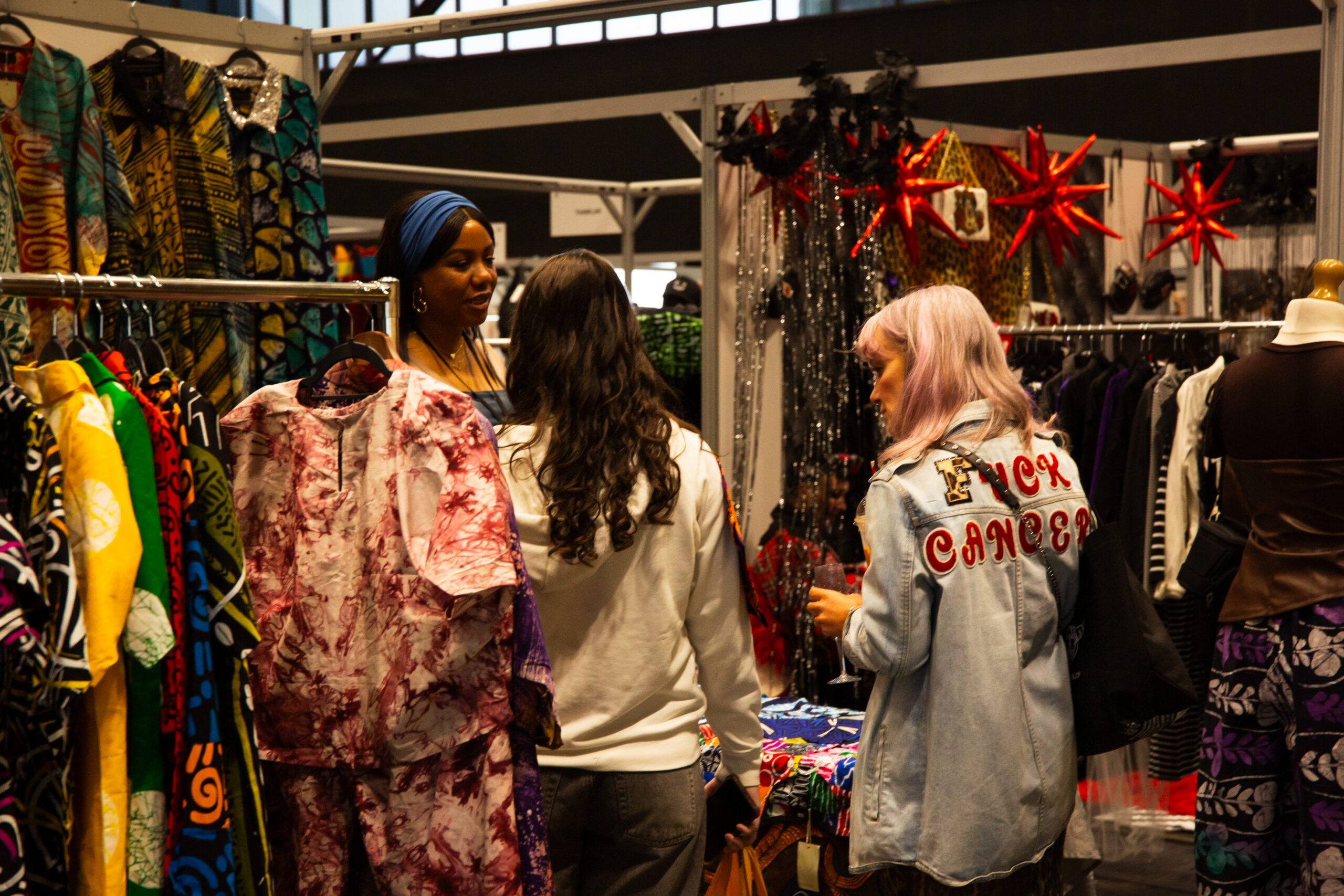
What links these two is something far more enduring than trends: the ability of retail to create space for connection, not just consumption. Markets, pop-ups and shows like The Good Clothes Show have always been places where trade is personal. Where customers take time to hear the story of a material, understand where something comes from – and why that matters. These spaces allow for nuance. For dialogue. For the kind of layered storytelling that mass retail so easily loses –individual, not generic. Whether it’s a curated vintage stall or an independentboutique where you stop for a natter and leave knowing the provenance of everything you’ve bought, these places offer a rare opportunity to slow down. To enjoy conversations. To ask about origins. To experience something tactile and grounded.
They also support ecosystems – of artisans, growers, designers and local economies – who rely not just on footfall but on people passing on stories. On people valuing the work behind the product, not just the price tag. And increasingly, I believe people do want this: to know not only what they’re buying, but who and what they’re supporting. To feel like participants in something larger.
In many ways, this return to story-driven retail feels less like a trend and more like a remembering of how trade once was. And still can be. Rooted in place, in people, in nature.
Today, as we navigate the noise of algorithms, fast everything and a perfectly-generated sentence in seconds, there’s something almost radical about stepping into a space that invites you to listen. To touch. To ask where something comes from and to care about the answer. That’s what independent fashion does. That’s what you do. And it matters more than ever.
The Good Clothes Network aims to build community and provide support for independent small fashion and lifestyle brands.
All Rights Reserved.
Brought to you by Oakham Group Ltd.